This blog was initiated as an examination for a course at the University of Leiden. The course is called History of Modern Political Philosophy. It is taught by Antwerp-bound scholar Herbert de Vriese. This blog serves to give a short introduction to the subject, exploring some of the major themes of political philosophy: authority, legitimacy , obedience and societal values. The works that will be used to expound on these subjects are: Utopia by Thomas More, the Prince by Nicolo Machiavelli, Leviathan by Thomas Hobbes, the Second Treatise of Government by John Locke, and the Social Contract by Jean-Jacques Rousseau.

Thursday, 13 June 2013

Conclusion


Images: Banksy. 

The purpose of this blog has been to inform the reader about three of the most ground-breaking political philosophers of the Pre-Modern era. Its goal was in no way to be exhaustive but rather to point out the parallel concerns that have interested thinkers who lived ages apart. What should strike the reader is the variety with which these thinkers have answered similar questions: why do men come together in polities, what legitimizes authority, and what societal values ought to be protected? 

If we retrace our steps we see that for Rousseau freedom was the paramount virtue and the chief goal of politics was to instil people with the right kind of freedom, and not just to supply them with the limited elbowroom of the natural condition. Morality would then spring from the actions of these transformed human beings. According to Hobbes, on the other hand, morality could only be squeezed out of people using a massive amount of pressure. The more powerful the Leviathan, the more obedient and safe its people were. The only thing that a government should guarantee is safety from external and internal corrosion. Though Hobbes and Rousseau probably find themselves on the extreme ends of the spectrum at least they find themselves on the same scale, speaking the same language, whereas Locke seems to occupy a position outside of their paradigm. Both Rousseau and Hobbes are extreme in their ideas. They adhere to some kind of truth: that morality is either the product of liberated -republican- thought or that it comes about by extortion. 


Locke does no such thing and perhaps that is why now, post-French revolution and post WWI and II, in this world that is predominantly characterized by disillusion and scepticism Locke's ideas are the ones that have survived in their most concrete form. To adhere to any kind of truth too firmly is to risk everything. Locke's theory does not preach any truth except, perhaps, for toleration. Rather it supplies a blueprint for dealing with people and living in complex, multi-cultural, societies; societies where people may have nothing in common, not even their values. It protects individuals from each other, as much as from their government. Ironically, the right to own property, which was meant to do away with hunger and to empower the citizen, has been misused to throw up walls between people. Perhaps we should consider tearing them dow. 

Wednesday, 12 June 2013

Rousseau: Forcing to be Free

"Perhaps the most widely shared account of how, for Rousseau, the use of coercive power to force compliance with the law can amount to forcing to be free is the so-called social-autonomy account.' That account turns on Rousseau's important distinction between natural freedom and what he calls moral freedom or autonomy, a distinction that is understood as, roughly, a distinction between being able to do what one wills to do without interference or impediment and self-conscious rational self-determination" (p  303). 

Steven G. Affeldt. "The Force of Freedom: Rousseau on Forcing to be Free". Political Theory. Sage Publications. Vol 27-3. pp 299-333. Accessed on Jstor 09/06/2013. 

One of the unresolved paradoxes from Rousseau's text is the one about the legitimacy of force in politics. In Rousseau's opinion, force precludes right, or duty. Therefore anything that is accomplished by means of force is not politically legitimate. However, apparently, when it comes to unifying all the particular wills of the people and transforming them in order to attain a general will, it is perfectly alright to use force. Dissidents must be made to see the light, "forced to be free". This tension in Rousseau's work about whether force is ever a good thing has been the subject of much debate.

The paradox is open to more than one interpretation. The first one relies on the presupposition that republicans owe their republic for the protection that it gives them. Acting according to the rules -the general will- is a means of showing that gratitude and in the end results to nothing more than being a good citizen. After all, there is something illogical about entering or being part of a republic, and thus being guaranteed to have your best interests looked after, and then simply not cooperating. In this respect people can forced to be free.

Another interpretation, and widely thought to be a more insightful one, is the interpretation that discerns two different kinds of freedom, one that is associated with the republic, and one found in natural condition. In the latter state, freedom means being free to give full vent to your passions and desires without anybody judging or limiting you. In the republic however, this kind of freedom is construed to be false. After all, being a slave to your senses does not even come close to what liberty truly is. The republican idea of freedom means being subject to no one, except to yourself, and the rules that you put down. This is called autonomy, a quality that is capable of transforming people from animals into true moral and political human beings. It is this quality that enables people to separate that which is good for oneself, from that which is good for everyone. 

Sunday, 9 June 2013

Rousseau: Transformation

"I mean to inquire if, in the civil order, there can be any sure and legitimate rule of administration, men being taken as they are and laws as they might be. " (Book 1 preface)

Jean Jacques Rousseau. The Social Contract. Trans. G.D.H. Cole 1782. Rendered into HTML and texts by Jon Roland of the Constitution society. http://www.constitution.org/jjr/socon.htm

Despite Rousseau's initial willingness to deal with "men as they are" he is surprisingly eager to see them changed for the sake of his republic. The transformation of men into republicans is both a necessary condition for, and the incredible result of the social contract. But what was so wrong with mankind that Rousseau thought it was necessary to change them in order to arrive at a legitimate form of government? In order to answer this question scholars have had to refer to Rousseau's other, decidedly more pessimistic work: the urgency of the republic arises from a situation very different to that of the natural condition, which Rousseau deemed to be rather positive. In fact, the republic is a solution a problem that is not explicitly mentioned in The Social Contract: Locke's bourgeois citizenry. 

According to Rousseau the purity of man in the natural condition was spoiled the first moment that one person claimed something as his own property. Since this pivotal moment the Lockean nightmare has kept us in its sway. In order to escape from it, the materialistic egotism that has permeated the political sphere and all our political thoughts must be abolished. In a republic all political, meaningful decisions will need to be made in a spirit of complete abnegation. 

The question of whether this is even possible must have haunted Rousseau as it concerns the very nature of mankind -and thus the basis of every political theory. In the end, Rousseau came up with a very modern compromise that presupposes a kind of dichotomy in human psychology. Rousseau assumed that people were capable of being ruled by generosity and selflessness in the political sphere, but may yet cherish radically different opinions in the privet sphere. The idea of people as multifaceted beings, filling different or even contradictory roles depending on which situation they find themselves in, is something that is quintessentially 'modern'. The idea of an evolutionary biologist who is religious is no longer as inconceivable as if first was. As the 19th century -the age of reason- drew to a close that almighty concept called 'rationality', in which so much had been invested, turned out to be far more complex than people had ever imagined.

Rousseau: Religion Paves the Way

"We should not, with Warburton, conclude from this that politics and religion have among us a common object, but that, in the first periods of nations, the one is used as an instrument for the other." (Book 2:7)

Jean Jacques Rousseau. The Social Contract. Trans. G.D.H. Cole 1782. Rendered into HTML and texts by Jon Roland of the Constitution society. http://www.constitution.org/jjr/socon.htm

Republicanism requires of its citizens that they sacrifice their natural freedom and their amour-de-soi, their natural selfishness. This selfishness is not construed as something wicked. It is a quality of man that enables him to live as a noble savage, an aristocrat among animals. However tolerable this state of being, if man is to transcend the animal kingdom, another form of grace is necessary, and more suitable. In a republic the natural selfishness of man needs to be conquered by a free and constant selflessness; in the political sphere not the particular, but the common good must prevail. Evidently this transformation is not one that happens over night. 

It is a common reproach that if Rousseau's republic were to succeed, it would need Republicans to kick it off, which is of course an impossibility. If the law makes the people, then who makes the law? For Rousseau this was one paradox that he could not allow to remain unsolved. His solution was that the initial laws of the Republic should be proposed by an extremely wise and benevolent legislator. The public just has to accept them -though of course they are free to refuse. The proposed rules serve as a starting point which the common will is free to adapt as soon as it has established itself. 

Sometimes in the course of history a proposed set of rules has been so convincing that it was adopted instantly. Rousseau refers especially to Ancient Greece where it was common for foreign legislators to propose laws that would be objective and fair to all. However, most fledgling republicans are not so eager and need to be convinced. This is where religion comes in. In order to convince people of the truth and fairness of a law it is completely justified to breed a religious atmosphere beneficial to its survival. Judaic law has only been this successful because it was preached by the arch-legislator himself, Jesus Christ. According to Rousseau prophets are legislators and religion is an instrument that helps to lay the foundations of a Republic. Rousseau's heretical interpretation of religion demonstrates his knowledge about the nature of man. Some people are deaf to reason, but they are not impossible to communicate with. They only need to be spoken to in their own language which is compiled of prophesy, superstition and fiction.  


Sci-Fi Epic Dune posits a universe in which Religion is equally used as a political strategy, to pave the way for future civilisation. Also, it features giant worms. 

Rousseau: The Right of the Strongest

"To renounce liberty is to renounce being a man, to surrender the rights of humanity and even its duties. For him who renounces everything no indemnity is possible. Such a renunciation is incompatible with man's nature; to remove all liberty from his will is to remove all morality from his acts." (Book 1:4)

Jean Jacques Rousseau. The Social Contract. Trans. G.D.H. Cole 1782. Rendered into HTML and texts by Jon Roland of the Constitution society. http://www.constitution.org/jjr/socon.htm

In the first book of The Social Contract Rousseau vehemently attacks the idea that slavery can be justified. He criticizes Hobbes especially, but includes Aristotle, Grotius and the Roman emperor Caligula in his invective, according to whom some people were born for slavery, and others were simply not. "Nonsense" exclaims Rousseau. People are born free and equal and the only arguments in favour of slavery are circular. 

Generally, the right to enslave a person, according to Grotius, stems from his right to kill that person. In which case slavery is justified because it is beneficial to both parties. The slave buys back his life with a lifetime of servitude -but, Rousseau insists, where does this right to kill a person originate? It is derived from the idea that lies at the heart of the matter: the right of the strongest. However, force, according to Rousseau, cannot be linked to right, or duty, or politics. If force is added to the equation the entire dimension of morality is lost. There is no morality in an action that follows a command. In this respect Hobbes' Leviathan is not a political ruler, but a despot; and equally there is no virtue in Locke's civilised citizenry, because it also comes about by force -the supreme executioner who keeps everyone on the straight and narrow. Politics to Rousseau is a question of determining what people ought to do, what is ethically correct, not just for oneself, but for everyone. 

If the right of the strongest is void, because it is not a right at all, what could possibly bind a slave to his master? A slave gets nothing in return for his labour, not even peace or tranquility, because there is no certitude in serving a person who has absolute power over you. Moreover, even if his master is benevolent and kind, there is nothing in the world that could match the sacrifice that the slave makes; his liberty is that what makes him human. In conclusion, there are no reasonable grounds for slavery. Rousseau will have to come up with other conditions, conditions that don't rely on force, if he is to bind his people and transform them from a mass into a polity. 

Rousseau: Embracing Paradox

“Finally, each man, in giving himself to all, gives himself to nobody” (Book 1:6)

Jean Jacques Rousseau. The Social Contract. Trans. G.D.H. Cole 1782. Rendered into HTML and texts by Jon Roland of the Constitution society. http://www.constitution.org/jjr/socon.htm Jean-Jacques Rousseau by Maurice Quentin De La Tour (1753)

In the work of Rousseau all contradictions meet. They are not resolved but are accepted as part of the bigger picture -anticipating the dialectics of Hegel. A person in search of the truth must be able to work with them. After all, in the words of F. Scott Fitzgerald: "the test of a first-rate intelligence is the ability to hold two opposed ideas in the mind at the same time, and still retain the ability to function. One should, for example, be able to see that things are hopeless and yet be determined to make them otherwise." Rousseau passed this test with flying colours. He reconciled the concern of authority with the importance of liberty; a marriage of political realism and political idealism, its progeny: the republic. 

Rousseau was an author of novels, opera, philosophical and educational treaties. He was loved by many, and despised by a few more. He was catapulted into fame when he won an essay contest with an extremely controversial submission. The work he submitted gave a negative answer to the question of how arts and sciences had improved the world. However, despite his pessimism he continued to be a champion of the arts and sciences, even working on the French Encyclopédie. It seems that paradoxes were part of his life as well as his philosophy. 

In The Social Contract Rousseau offers the solution to a problem that he sees has arisen in Locke's treatise: the problem of materialistic confinement and the lack of political wholesomeness.  In the game of interest politics people do not actively contribute. They merely represent interest parties vying for attention. Additionally they console themselves by amassing property which only ties them down, hinders their movement in the political sphere, and distracts them from making any meaningful contribution. In his philosophical work Rousseau offers to do away with private property -because it was always the State's concern anyway. He proposed that people should merely become guardians of that which, because it belongs to the state, belongs to everybody. In a republic the people are sovereign. They sacrifice their own particular desires in pursuit of the common good. In doing so they form an indivisible whole with a general will. The general will can never be false, can never have anything else in mind than the good of the people, and as such, it is the supreme law. 

Locke: The New World

“Even if we were to take Locke's point that accumulated coins liberate us from our moral qualms about keeping barnsful of wheat and root cellars overflowing with rotting crops, we would not thereby be freed from the other limit imposed upon us by natural law. The storage of wealth in the form of money does not leave "enough, and as good" so that others might live. Locke's theory of property violates this second limit set by a natural law the validity of which Locke never questioned or claimed suspended.” (p 574)

Herman Lebovics. "The uses of America in Locke's second treatise of government". Journal of the History of Ideas. Vol 47, Nr 4.  University of Pennsylvania Press

The social contract, to Locke is a solution that, like nuclear energy, should only be used as a last resort. Its consequences are permanent and drastic, and it takes a really dire situation in order to equal the cost of the sacrifice. No wonder Locke dramatically called this situation "The State of War", a situation wherein people are no longer sure of their safety, and particularly their property's safety. In the end it is this fear of losing property that tips the balance and makes people to congregate under one body of rulers. 

Preceding the social contract Locke already conceived a community that had all the characteristics of a polity, except a centralized authority. For example, the rules of property were already crystal clear, derived from the belief that the earth was given to man by God for the purpose of cultivation, and that God had created enough of it to satisfy any number of people. News of the far-reaching, fertile plains discovered in the New World undoubtedly fueled these beliefs. To Locke America was a kind of deus ex machina. Here was an entire continent: perceived to be almost empty. The few inhabitant living there in pre-political, peaceful communities inspired Locke to ascribe a historical reality to his natural condition. His emphasis on the reality of the natural condition was meant to underline the feasibility of Locke's ideal government.  

In a way though Locke's interpretation of the New World was naive. He saw it as more bountiful, and purer than it actually was. The truth about the Native American communities was that they were very much political, though not in the sense that Locke understood, and America was not really a land of inexhaustible plenty. There was wealth of course, but wealth is always relative. Having a lot of it does not mean one is rich, except of course if your neighbour has very little. The native Americans knew this, and lived by it. There was social class even among them, though it was not because one owned more land than the other. It was a question of lineage and prowess. Locke's ideas about property and money are based on two faulty premises: that property equals wealth, and that it is inexhaustible. 


Monday, 13 May 2013

Locke: Interest Politics

“Whosoever therefore out of a state of nature unite into a community, must be understood to give up all the power, necessary to the ends for which they unite into society, to the majority of the community” (section 99)

John Locke, A second Treatise on Government. Hackett Publishing Company, Indianapolis and Cambridge 1980. (Gutenberg txt).  

Locke's Second Treatise of Government reads like a very different text to Hobbes' Leviathan. It is less mechanical, less orderly, less ambitious perhaps. However, as far as literary merit goes it is certainly the superior, rife with metaphor, emphatic language and clever repetition; Locke set out to make a point knowing that he would have to convince and educate masses of people about their rights as citizens. After all, to become a citizen one had to sacrifice complete independence in favour of relative stability under a majority vote. 

Locke’s solution of the majority vote expresses once more his belief in man as an independent actor. The majority vote does not call for people to compromise and thus give up their opinions. Governments represent a whole range of different people. The majority vote is the least destructive method of making sure the general public is given their way. If a voter's party loses the elections, the voter is forced to adhere to laws he/she does not condone, however, there is always the next election, and the one after that. As diverse as the public, such should be the government. Locke’s advice is that authority should not be concentrated in one person. The role of authority, after all, is that of umpire. Objectivity is easier obtained by a group than by an individual.

The danger with Locke’s theory is that, as government is reduced to the position of umpire, citizens will merely become competing parties, parties who would rather see their rivals perish than come to a compromise. In a Lockean society citizens have been granted all these rights, the right to revolution even, if they think that their property is in danger, but they have not been made aware of their duties. These duties were present in the pre-political condition, in rudimentary form. The natural right to enforce the natural law, for example, calls upon a political wakefulness that benefits not only the individual himself, but all of the community. As this right is relinquished by the social contract, people are only asked to look out for themselves; as a result there is no superior goal, no greater good, and nothing connecting people to each other but animosity. 

Sunday, 21 April 2013

Locke: The Problem of Hoarding Goods

"And thus came in the use of money, some lasting thing that men might keep without spoiling, and that by mutual consent men would take in exchange for the truly useful, but perishable supports of life." (Section 47)

John Locke, A second Treatise on Government. Hackett Publishing Company, Indianapolis and Cambridge 1980. (Gutenberg txt). Image: P.D. White. http://www.pdwhite.com/dragons-hoard.html


In order to sanction the right to private property which is so essential in Locke's theory, he had to prove why it was such an attractive idea. He did so by stating that private property is more lucrative than common or shared property. A field, he said, will yield to one person about as much as this person will invest. If many people cultivate a field with the goal to get only as much grain as they can consume themselves, the field will produce very little. However, if one person works the field intensively, and invests all his time and energy in it, the produce is increased tenfold, if not a hundred or even a thousandfold. The surplus, of course, was to be shared by everyone, after all it is against the natural law to hoard perishable resources, and waste them. 

Having proved that private property was indeed more lucrative, Locke had yet to evince how it was worth someone's precious time and energy. After all, there was always the risk that one industrious person would work himself to death, all the while feeding a bunch of opportunists: people who only needed to sit by and wait while the harvest threatened to rot. The invention of money, whereby gold, which is naturally scarce and therefore valuable was substituted for perishable goods, was a convenient solution in order to prevent such a situation. Money, to Locke, is the motor behind industriousness. It allowed hardworking people to get every penny's worth of their time in the field. Since money kept forever, and because it was not a commodity that people needed in order to live, breathe or be healthy it was exempt from the restrictions against hoarding, condoning the unlimited, unconscionable accumulation of it. Ironically, though, the problem Locke first set out to solve was the problem of the unlimited, unconscionable accumulation of power. 

Instead of denying the problem of the unlimited accumulation of goods, Locke faced it head-on and decided that it didn't have to be detrimental to his theory. The desire to amass property doesn't have to be problematic if it doesn't harm anybody physically by creating scarcity. 
His solution, therefore was, once again not political -it preceded the instigation of a legal authority- but economical. If everyone were to keep working in their fields, their orchards, their workshops resources would become so plentiful that no one would ever have to be hungry again. To many modern readers this will sound like an oversimplified, if not blatantly naive portrayal of productivity. Time has taught us that there is no inexhaustible resource, and concerning what little there is, increased labour will not always yield bigger produce. 

Tuesday, 16 April 2013

Locke: on Property

“Though the earth, and all inferior creatures, be common to all men, yet every man has a property in his own person: this no body has any right to but himself. The labour of his body, and the work of his hands, we may say, are properly his. Whatsoever then he removes out of the state that nature hath provided, and left it in, he hath mixed his labour with, and joined to it something that is his own, and thereby makes it his property.” (section 27)

John Locke, A second Treatise on Government. Hackett Publishing Company, Indianapolis and Cambridge 1980. (Gutenberg txt). Image: dreamstime.com

Property, to Locke, is as important as self-preservation. In fact, his concept of self-preservation is derived from the right to self-ownership: after all "every man has a property in his own person". Self-ownership includes the right to life, health and freedom because these sustain it, but also the right to whatever is a product of one's hands, and one's labour. Property is assembled by mixing that labour with a natural resource i.e. the labour of picking an apple makes that apple the property of the picker. But why is property so important to Locke, when in Hobbes is was wholly neglected? 


Locke, unlike Hobbes, was looking for ways to strengthen the individual’s position in relation to his lord and to his fellow man. He did so by granting him a right of property. If citizens can be landowners, they can contribute financially, which makes them a powerful demographic; private property is more lucrative than shared property, to both society and individual. Whereas in a shared operation people might shirk work, private landowners will not. They will exploit their resources to the utmost degree, after all, the benefits are theirs and do not need to be divided over a large group of people. These benefits  become especially worthwhile with the invention of money, which allows them to be hoarded. Additionally, having property means one has the ability to step out of a social contract. Imagine a person born under a polity which eventually he disagrees with, but, by which he has acquired a lot of property. All that is necessary for him to break with the contract is to give up said property and move out. The benefit for those under a Lockeian contract (as opposed to a Hobbesian) is that one need not be in mortal danger to break with it. The conditions are far more lenient.  

Monday, 8 April 2013

Locke: an Alternate State of Nature

"Men living together according to reason, without a common superior on earth, with authority to judge between them, is properly the state of nature. But force, or a declared design of force, upon the person of another, where there is no common superior on earth to appeal to for relief, is the state of war: and it is the want of such an appeal gives a man the right of war even against an aggressor, tho' he be in society and a fellow subject." (section 19)

John Locke, A second Treatise on Government. Hackett Publishing Company, Indianapolis and Cambridge 1980. (Gutenberg txt). Image: sir G. Kneller, portrait of John Locke.1697. Houghton Hall 1779.

The Glorious Revolution was to Locke as the civil war was to Hobbes; the two important political events supplied these great thinkers with crucial moments of insight. In 1688 king James the II (of England) was overthrown by parliament. The struggle was mainly a religious one: the Catholic Royals had always clashed with parliament, which was predominantly protestant. However, both parties had been pressing each other’s buttons for over centuries now, competing for power. A year after the Glorious Revolution the Bill of Rights was drawn up, which first attributed citizens with inviolable rights. 

Locke abhorred absolute, unlimited power. His work on political theory does its best to protect citizens from the whimsy of their ruler(s) consolidating their position and property. Clearly, Locke had a decidedly better opinion about mankind, as his view on the natural condition will demonstrate. Locke's natural condition is, exactly as in Hobbes' theory, a pre-political world where people are rational agents, roughly equal to each other. However, where in Hobbes' theory this equality bred war and damnation, Locke sees it as the foundation for empathy and respect. Reason teaches man too cherish that which makes him human, and therefore to cherish the same in others. As a result, it is a natural law to preserve one's fellow man as well as oneself (with the latter taking precedence over the former in drastic circumstances).  While this natural law is adhered to by the general majority, things will start to fall apart when even some few individuals fail to respect it. 

To deviate from the golden rule -treat others as you would like to be treated yourself- is, according to Locke, irrational, but it happens. People are often overruled by their passions: covetousness, greed, lust etc. The threat of this irrationality is a constant concern for the inhabitants of the idyllic natural condition. When one individual falters, and endeavours to subject others to his will, the response from the community –for it is by that time a community, if not yet a polity- is fierce and indignant. Whereas generally an offense should be repaid in proportion to the severity of its consequences, some offenses will call for a more emotional response; and crucially, with 
everyone being free and equal, everyone is free to become his or her own executioner. For lack of a neutral authority to decide on proper justice, there is no deterrent against revenge. Thus a circle of enmity and malice is born and gone is the Arcadia of the natural condition. 

Hobbes: Irrationality and the Social Contract

“There is a fourth major problem with Hobbes's analysis, one which obviously bothered him considerably. How is his theory going to work for someone who fears eternal damnation more than an immediate earthly death? Why should someone who fears God more than the Sovereign obey the Sovereign rather than God? (...) the fear of invisible powers is stronger than the fear of violent death as long as people believe in invisible powers, i.e., as long as they are under the spell of delusions about the true character of reality; the fear of violent death comes fully into its own as soon as people have become enlightened.”

Ian Johnston. (lectures) On Hobbes Leviathan. Vancouver Island University. Last edited Dec. 2002. http://records.viu.ca/~johnstoi/introser/hobbes.htm [05-04-13] Image: M. Dur. Touch Wood. Cartoonstock. 


In order for his theory to work, Hobbes relies on the presupposition that man is a rational being. After all, the social contract is a set of rules that all (or most) rational creatures would adhere to. But how rational are humans really? It is important to question these presuppositions because Hobbes may take them for granted. Sure, man is possessed of a rudimentary kind of rationality that enables him, for example, to weigh pros against cons, or to do some basic problem-solving; but man is also afraid of the dark, deeply religious and sometimes incredible stubborn and/or irrational.  

It is not an act of reason to believe that, during mass, the wine and bread physically turn into the blood and flesh of Christ, but rather an act of faith. Faith, to Hobbes, was very problematic, not only because the Pope competed with the sovereign for the obedience of the people, but also because faith or superstition -so ingrained into our thoughts- will keep us from giving the social contract a fair consideration.

It is not just religion that has to be curbed in order for the social contract to stand a fighting chance. Hobbes overlooks, or merely refuses to accept many 'irrational', but essentially human characteristics that have the potential to overthrow the social contract. The human need for bonds, friendships and love is blatantly neglected in Hobbes' theory. Man may not be the sociable animal of ancient Greece, who revels in politics, but he is also certainly not solitary. Family matters.  Hobbes insistence on vertical bonds i.e. laws between sovereign and citizen is not enough to offer adequate direction. The natural hierarchy between people, families, neighbourhoods, religious orders as well as the bonds between them (and their Gods) all need to  be kept in mind in the formulation of any kind of social contract. 

Focus: Rationality

Now that More, Machiavelli and Hobbes have all passed the revue, -each contributing their own answers to perennial questions regarding political philosophy, it seems only right that, in order to avoid repetition, and to add an agreeable specificity to this blog, one particular topic should be singled out among others which is to be focused on in more detail.


From this point onward I'll try to comment on the concept of rationality as it is used by the political philosophers that have yet to follow: Locke and Rousseau. Rationality is an interesting concept because, in the 18th century, the age of reason, it occupied an important role in any theory about humankind and the manner in which he congregates. Rationality has been both lauded and criticized and it appears in many different definitions. Furthermore, because rationality is believed to be such an inherent part of human nature, and because political philosophers merely derive their theories on politics from their view of human nature, a research on rationality is sure to come to some interesting conclusion. 

Friday, 22 March 2013

Hobbes: The Roots of Libertarianism


"As it is necessary for all men that seek peace, to lay down certain rights of nature; that is to say, not to have liberty to do all they list: so is it necessary for a man's life, to retain some; as right to govern their own bodies, enjoy air, water, motion, ways to go from place to place; and all things else, without which a man cannot live, or not live well." (p102)

Thomas Hobbes. Leviathan. J.C.A. Gaskin (ed. & introduction). Oxford World's Classics. Oxford University Press. 2008. Image:        http://www.freedomsphoenix.com/News/119827-2012-10-01-inside-the-cold-calculating-libertarian-mind.htm?EdNo=001&From=
Inside the Cold, Calculating Libertarian Mind

At the conception of the Leviathan there is a moment of doubt in which both natural man and artificial man stand opposite each other and hesitate. In light of the considerable sacrifices he must make it is only understandable that the natural man should hesitate, but why should the Leviathan? 

Hobbes is responsible for laying the foundations of the Libertarian concept of nontransferable rights. These are rights, or liberties, that, because reason mandates, one cannot give up. For example, the right of self-preservation is impossible to give up because it is irrational to do so. No one in their right mind would opt for death over a lesser sentence. For this reason, if a person is commanded to fight a battle he or she is sure to be killed fighting in, it is not irrational, or against the social contract, to refuse. 

To Hobbes the most important, if not the only, nontransferable right is this right of self-preservation. All other nontransferable rights are derived from it, such as the right to food and water, air etc. If this right is violated, by either ruler or citizen the contract is breached, and as a result none of the clauses retain their authority. Disobedience (revolution!), therefore, is sometimes rational when the circumstances are right. But when are they? The answer to this question depends on what is understood by preservation of life. In Hobbes' philosophy the Leviathan still has the lion's share of the power, because the nontransferable right is severely restricted. Preservation of life is not understood to be the same as the safeguarding of individual, autonomous identity because that requires an authority over religious and cultural matters that the citizens of the commonwealth simply don't have. 

However, the model has the potential to be completed in whatever way people want, as can be seen by many examples in the course of history. For example, the foundation, laid by Hobbes, has served the libertarians perfectly. They have only needed to add to the nontransferable rights some things that théy thought were important (or crucial to a man's life) like property. Exactly the potential of Hobbes' Leviathan to be used in such a libertarian way has led monarchists to call it the rebel's catechism. 

Hobbes: of Rights, Rulers and Representation

"The multitude so united in one person, is called a COMMONWEALTH, in Latin CIVITAS. This is the generation of that great LEVIATHAN, or rather (to speak more reverently) of that Mortal God, to which we owe under the Immortal God, our peace and defence. For by this authority, given him by every particular man in the commonwealth, he hath the use of so much power and strength conferred on him, that by the terror thereof, he is enabled to conform the wills of them all, to peace and home, and mutual aid against their enemies abroad." (p114)

Thomas Hobbes. Leviathan. J.C.A. Gaskin (ed. & introduction). Oxford World's Classics. Oxford University Press. 2008. Image: R. Delgado. http://www.cartoonstock.com/directory/w/worshipping.asp


In the natural condition peace is an impossibility. Though fully able to conceive of the conditions and rules for keeping the peace, it is yet irrational for people to act according to those rules because it makes no sense to behave yourself if peace cannot be guaranteed. Only a collective sacrifice will do. However, what crucial element is lacking in the natural condition, making it impossible to enforce this collective sacrifice continually, is authority. The solution therefore, is to create authority by denying yourself some of your natural rights, and transferring them to someone else. This is the creation of the great Leviathan, that person to whom we surrender some of our rights, in return for peace.

The rights that people ought to surrender are those they can do without, for example, the natural right to enslave another person, or the natural right to take what doesn't belong to you. It is rational to forego these liberties in exchange for such a valuable commodity as peace: a fair deal. But technically, people could also give up the natural right to practice whatever religion they want, or the natural right to settle their own arguments -all without endangering the preservation of their lives, which is Hobbes' sole concern. In fact, according to Hobbes, they should. Only the complete and utter surrender of all our transferable rights will make the Leviathan, and the commonwealth strong enough to oppose any exterior threat. When Leviathans have failed in the past, it was because they lacked the power that was owed to them by their subjects, the undivided power over legal, military, religious and constitutional matters. 

The sacrifice of the people is inexorably linked to the power of the Leviathan. This realization often comes too late but it is an important one. Hobbes solution is not flexible, nor is is applicable in degrees, it requires all, or delivers nothing. 


Saturday, 9 March 2013

Hobbes: Homo Homini Lupus

“The passions that incline men to peace, are fear of death; desire of such things as are necessary to commodious living; and a hope by their industry to obtain them. And reason suggesteth convenient articles of peace, upon which men may be drawn to agreement."(chapter 8, line 14 p. 86)

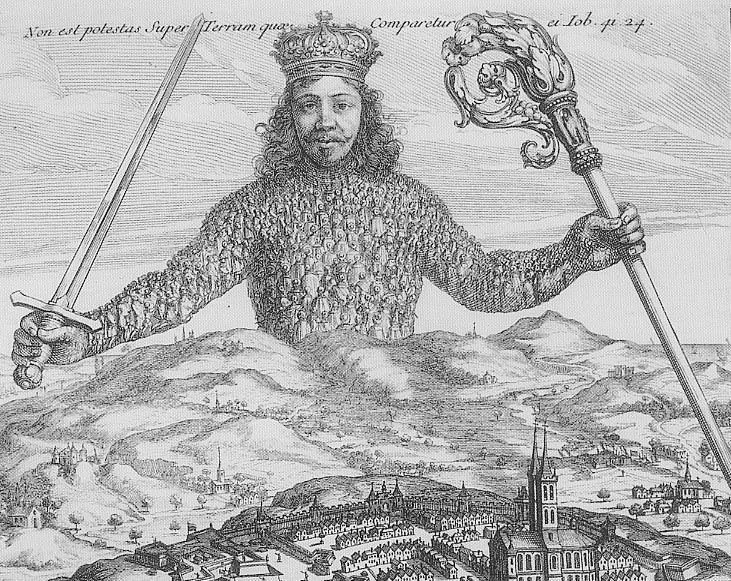
Thomas Hobbes. Leviathan. J.C.A. Gaskin (ed. & introduction). Oxford World's Classics. Oxford University Press. 2008. Image: Leviathan, detail of titlepage. 1750. Mansell Collection. 


Hobbes' interpretation of the nature of mankind lies at the heart of his theory of politics. His misanthropic view of mankind clashes with the ancient Greek observation of man as a sociable animal. For a more visual image of Hobbes' pessimism it may be insightful to turn to Hobbes' description of the state of nature, which is not, as many people falsely interpret, a historical reality, but merely a construct of reason. Hobbes devised it to explain and legitimize his proposed political order: absolute monarchy.

The state of nature is a thought experiment in which a world is conceived where there is no law, no authority and, consequently, no morality. It is peopled by anti-social individuals possessed with an instrumental rationality which enables them to get what they desire. They have what Hobbes called a Natural Right over everything, because they are free, by reason, to obtain and abuse everything in order to advance their own lot. Because physical strength can be outmatched with cunning, no man can elevate himself above others. From this situation of equality is bred a war of all against all. The competition is not solely because of the scarcity of goods, and therefore should not be imagined as Darwinian, or likened to the natural competition between animals. There is a crucial difference. If a lion and a gazelle gather around a watering hole, both fed and content, there is no strife. Not so with man. Pride and ambition as well as the recognition of these vices in the other, will lead men to wage a perpetual war. Moreover, the process is viciously circular: the anticipation of violence will lead only to more violence.

Interestingly, in the natural condition man’s rationality is perhaps both his doom and his salvation, for man is both able to anticipate the worst and conceive of the best possible solution. If the worst fate is death, the best possible outcome therefore, must at least offer security of life and possibly some extra comforts. It is irrational to accept anything less than this. Hobbes' reliance on the mandates of rationality is his pivotal argument. According to Hobbes, people do not act contrary to their reason, and so, if a reasonable solution to the war of all against all were to announce itself, people would be obliged, by Natural Law, that is by the workings of their own mind, to accept. 

Wednesday, 6 March 2013

Hobbes: the Premier Political Scientist

“Nosce teipsum, read thyself: (…) to teach us that for the similitude of the thoughts, and passions of one man, to the thoughts and passions of another, whosoever looketh into himself and considereth what he doth when he does think, opine, reason, hope, fear, etc., and upon what grounds; he shall thereby read and know, what are the thoughts and passions of all other men upon the like occasions.” (p 8, introduction)

Reference: Thomas Hobbes. Leviathan. J.C.A. Gaskin (ed. & introduction). Oxford World's Classics. Oxford University Press. 2008. 


The work of Thomas Hobbes should be read in light of the emergence of the modern state as we know it -marked by the absolute concentration and consolidation of power. The modern state was born when the tight bonds of feudalism were threatened by the Ottomans who were marching on Vienna after their conquest of Constantinople. The fall of the Eastern Roman Empire in 1435 shocked the rulers of Europe into action. The defeat of an empire which had stood for over a thousand years eventuated in a loss of faith in old traditional rule: the integration of church and stately power and the loose patchwork of vassal states.

Whereas in a Christian state power had been bestowed and borrowed by God, in the modern state power does not experience limitation and is up for grabs to just about anyone. In this world of disorder, where ancient ties and commitments mean absolutely nothing Hobbes presumed he saw the nature of mankind. Without order, without an awful authority hovering over the heads of men, people are cruel, cunning and lethal. 

Hobbes rejected the ancient Greek idea of man as a zoon politikon (ζῷον πολιτικόν), a political/sociable animal. His view of mankind delineates separate, independent, atomic individuals, roughly equal to each other. After all, what some may lack in strength they make up for in cunning. Hobbes’ atomic individuals do not need each other to live fulfilled, human and morally upright lives. Morality is a product of the social contract, but it is not its goal and certainly not man’s inclination. Additionally, where Machiavelli approached his philosophy in an already considerably scientific manner, taking examples from real life and deducing from them universal guidelines, Hobbes went one step further. He developed and presented his theory as an exact science; making use of axioms to argue his statements (as in geometry) and using terminology like 'natural law' and 'natural right'. The result was an overwhelmingly logical body of work based on some very basic assumptions about human nature. 

Machiavelli: Political Realism

“Those cruelties we may say are well employed, if it be permitted to speak well of things evil, which are done once for all under the necessity of self-preservation, and are not afterwards persisted in, but so far as possible modified to the advantage of the governed. Ill-employed cruelties, on the other hand, are those which from small beginnings increase rather than diminish with time. (…) Hence we may learn the lesson that on seizing a state, the usurper should make haste to inflict what injuries he must, at a stroke, that he may not have to renew them daily, but be enabled by their discontinuance to reassure men’s minds, and afterwards win them over by benefits.” (Chapter 8, Paragraph 9)

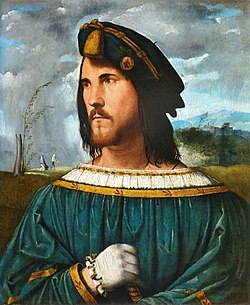
Reference: Nicolo Machiavelli. The Prince, trans. N.H. Thomson. Vol. XXXVI, Part 1. The Harvard Classics. New York: P.F. Collier & Son,1909–14; Bartleby.com, 2001. www.bartleby.com/36/1/. [09-03-2013]. Image: A. Melone. Portrait of a gentleman aka Cesare Borgia. 1500-1525.

Modern political philosophy was born with the completion of Machiavelli’s Il Principe or the Prince, in 1515, the same year More started work on his Utopia. The two works could not be more different: whereas More was trying to flee 16th century England on the wings of his imagination, Machiavelli remained firmly rooted in the rich, blood-stained earth of fractured Italy, which was made up of several extremely wealthy city states that waged constant war on each other. More’s Utopia describes a city that caters to the needs of very good, morally upright people, people that celebrate democracy, diligence and learning. Machiavelli had rather a different audience in mind.


According to him, people long for power above all things. The Prince offers practical advise on how to gain power and how to keep it. Machiavelli adds the necessary colour to his prose by frequently referencing the deeds of past kings and emperors. In his anecdotes Machiavelli does not distinguish between tyrants and saints. He measures the greatness of an empire by its glory and wealth, not by the happiness of its citizens or the ethics of its ruler. This is, perhaps, the greatest schism between Machiavelli and his predecessors: the divorce of ethics from politics.


Machiavelli explains how the cruelty of a ruler is fair, and necessary, if applied correctly, that is, rationally. The master of well-employed cruelties was surely Cesare Borgia, a Duke, Cardinal and Politician at whose court Machiavelli served in the winter of 1502 AD. The history of how Borgia quelled the rebellion in Romagna is one of the most infamous anecdotes of the book; Borgia ordered his friend Ramiro d'Orco to crush the rebellion using any force he deigned necessary. The mission was a great success, but the authority that d’Ocro gained as a result made Borgia nervous. So, he had the man publicly executed in the piazza of Cesena, confident that by the elimination of this potential enemy, he would also conveniently clear his reputation with the citizens of the town. According to Machiavelli, in order to be a successful ruler immorality is a prerequisite. Morality has use only in subjecting the people and glorifying the prince, and is not, in and of itself, something valuable or commendable. 

Wednesday, 27 February 2013

Thomas More: on the Brink of Modernity

“When Raphael had finished his story, I was left thinking that not a few of the custom and laws he had described as existing among the Utopians were quite absurd (...) my chief objection was to the basis of their whole system, that is, their communial living and their moneyless economy. This one thing alone takes away all the nobility, magnificence, splendor, and majesty which (in the popular view) are the true ornaments of any commonwealth.” (p 588)

File:Hans Holbein, the Younger - Sir Thomas More - Google Art Project.jpg
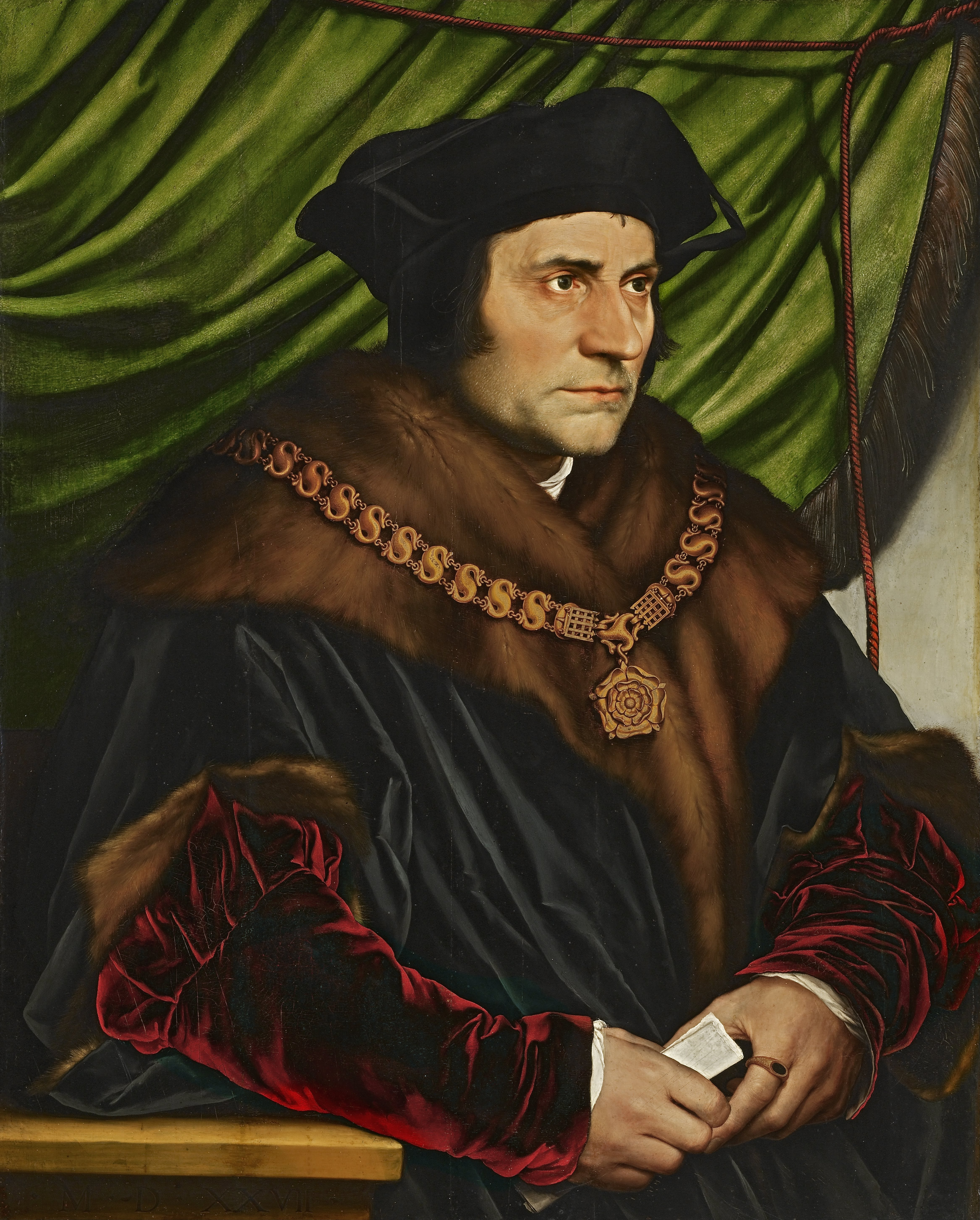
Reference: Thomas More, Utopia, S. Greenblatt (ed) M.H. Abrams (ed) The Norton Anthology of English Literature, eighth edition, Volume 1. Norton & Company, Inc., 2006. p 553 Image: H. Holbein, the younger. Portrait of Thomas More 1527. 

Thomas More was a political thinker on the brink of modernity. His most famous work, Utopia, is the product of a fierce sense of religious and political disillusion. More vents his objections in a manner that anticipates the characteristic method of modern political philosophers: the thought experiment.

Although it masquerades as literary fiction, Utopia is certainly a thought experiment. It gives an image of a society that has developed untouched by Christianity or by any other political conventions that reigned in 16th century Europe. It is a society devised purely according to reason. The island is ruled democratically, private property does not exist and everybody is included in the division of labour, even women. As a result people only work six hours a day, and are free to pursue any kind of recreation they want, granted of course that they do so conscientiously and without disturbing the peace.


Despite the radicalism of his ideas More is not the first modern political philosopher. Crucially, though Utopia is a construct of reason, and completely unprecedented in many aspects, it is not truly offered as an alternative alongside, say, More’s own England. On the contrary, More needs Utopia to be as far away from the known world as possible. Equally, he needs it to be described by the dubious figure of Raphael Hythloday, whose name roughly translates to ‘Speaker of nonsense’ all in order to discredit a society that has flourished without God. Since More was fiercely Catholic (a quality which cost him his life when Henry IIX declared himself head of the Anglican church) he found it impossible to fully commit to Hythloday’s heretical vision. The objections made by the fictional More of the story, would have mirrored the historical More's own qualms with Utopia.

 In this respect More differs from another political thinker, the first one accurately called ‘modern’, a contemporary from wealthy, decadent, and war-torn Italy: Nicolo Machiavelli. 

Thursday, 21 February 2013

Introduction to Modern Political Philosophy

What is it that makes modern political philosophy modern? Equally important: how and when did this shift occur? Did it happen gradually, or was it sudden and poignant, like the flash of light that takes the hiker by surprise as he stumbles out of the undergrowth and into the open field.

In order to explain what is ‘modern’ about the modern political philosopher it is wise to start by looking at where he came from. We have to delve into the metaphorical undergrowth and explore the tracks. We need not go far. In 1517 Martin Luther unleashed the Reformation by pinning his 95 theses onto the door of the All Saints’ Church at Wittenberg. The following age was principally concerned with the awesome resonation of that act. Through study and prayer both Catholics and Protestants sought to corroborate their faith. Although initially their endeavours to educate themselves were meant as a means to arm themselves against each other, the 17th century saw the rise of a much bigger foe: science.

The religious certainties that both Protestantism and Catholicism offered were wildly incompatible with those posited by science. The Enlightenment (1697-1789) formed the answer to this crisis. It had radical consequences for the modern political philosopher. It freed thought from its prison of tradition and ethics. The modern political philosopher does not take any authority or customs for granted. He liberates his imagination and draws insight from eclectic disciplines as science, literature and religion. All the while he is constantly starting from scratch, using as a guide only what he finds within himself: his reason and his own moral code.